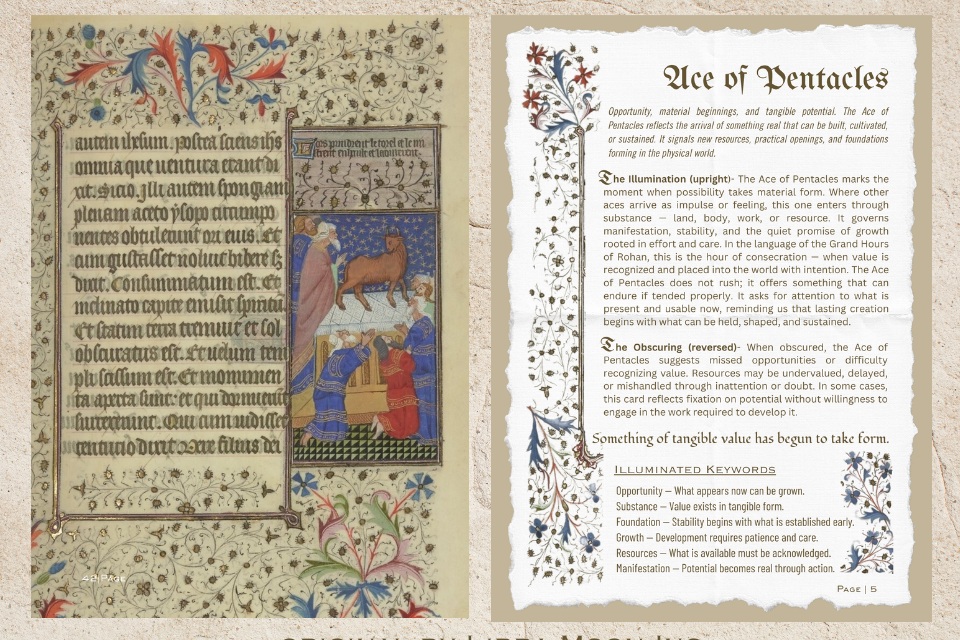
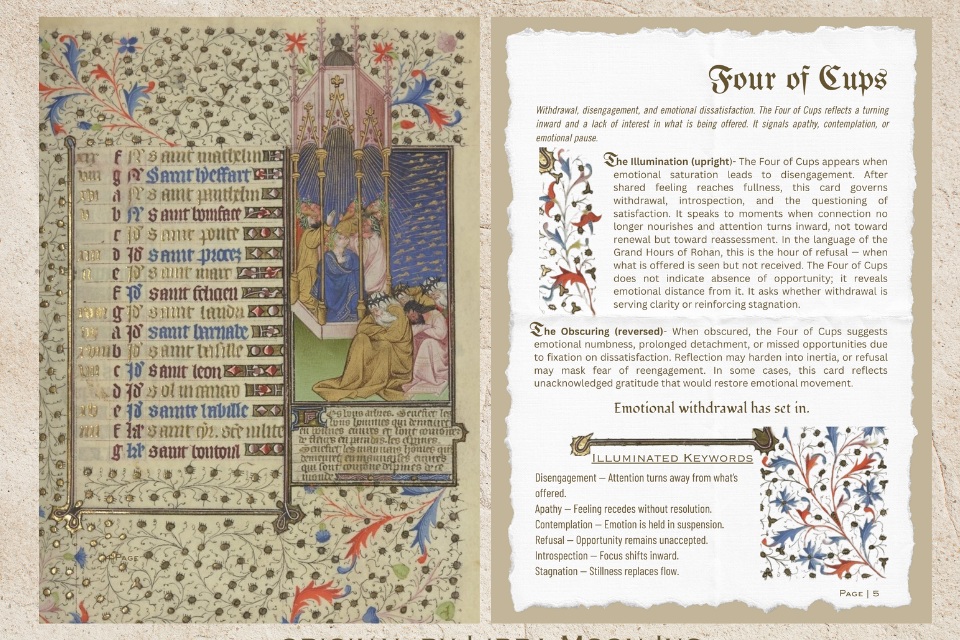
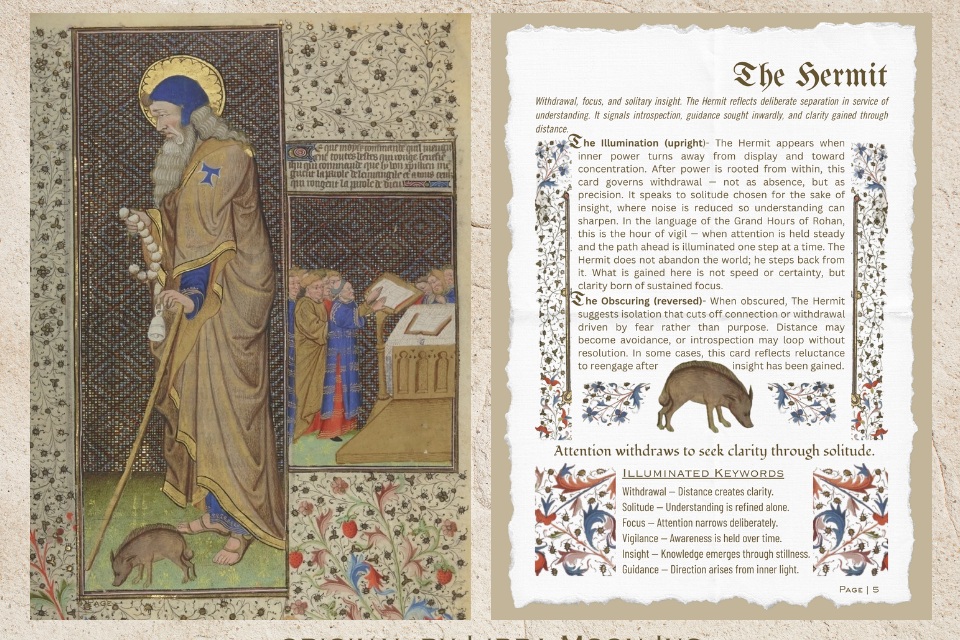
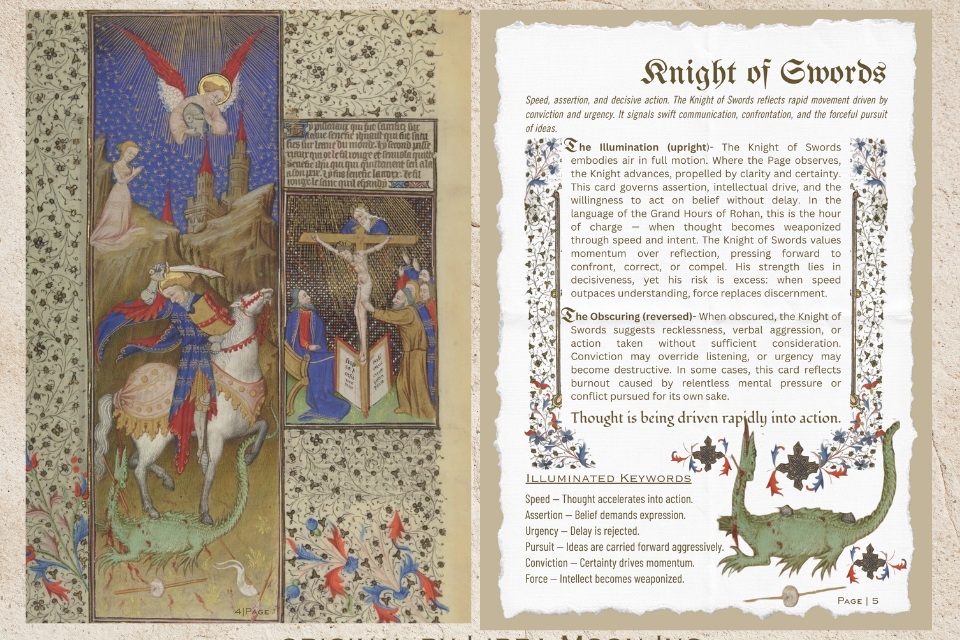
Long before tarot took form in Renaissance Italy, an illuminated manuscript emerged in France as early as 1418 — filled with haunting figures, raw human emotion, and visions of the sacred woven into everyday life. Known today as The Grand Hours of Rohan, this remarkable Book of Hours carries imagery that feels uncannily aligned with the archetypes we now recognize in tarot.
Tarot of the Grand Hours of Rohan reawakens these medieval visions through the structure of the tarot, as though a forgotten current of symbolic art has finally found its voice. Each card draws from authentic 15th-century imagery, revealing a world where spirituality, fate, sorrow, hope, and transformation were painted with startling psychological depth.
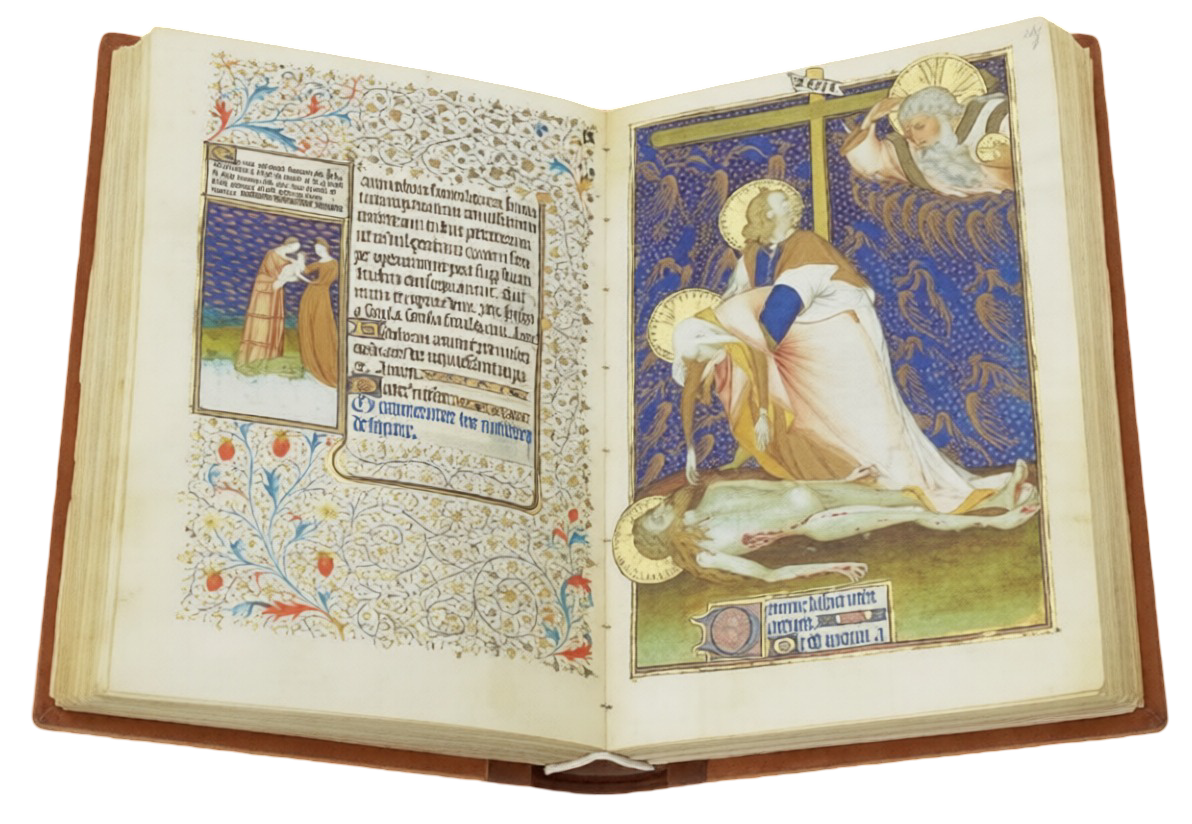
This deck is not a reconstruction of a historical tarot — it is a rediscovery. A meeting point between medieval mysticism and the timeless language of tarot, offering a glimpse into what tarot might have looked like had it emerged from the illuminated manuscripts of Northern Europe.
A lost visual lineage. A tarot waiting six centuries to be born.
What date was the Grand Hours of Rohan created?
The confusion stems from the fact that the "Grandes Heures de Rohan" does not have a documented, exact creation date. Art historians must deduce its origin based on stylistic analysis, historical context, and the identities of the patron and original owner. This leads to different interpretations:Patronage and Original Owner: The manuscript was likely commissioned by Yolande of Aragon, the Duchess of Anjou . The debate is whether it was made for her nephew, the future King Charles VII, around the time of his wedding in 1422 (supporting an earlier date) , or for her son, René of Anjou, around 1435 (supporting a later date) .
The Rohan Master's Career: The anonymous artist, known as the Rohan Master, had a long and mobile career, working in different cities like Paris and Angers . The manuscript's style shows influences from other masters and evolves throughout its pages, making it difficult to pinpoint a single year of execution .
Later Ownership: The manuscript gets its name from the House of Rohan, a Breton noble family that owned it after its creation. It's possible that their association with the book, or a specific event like the marriage of Charles of Anjou to a daughter of the Rohan family (which was proposed for 1431 but never happened), has led some to associate the book with that later date .
In summary, you are looking at a manuscript that is broadly accepted as a work from the first half of the 15th century. The specific range we have (1430-1435) is one of the most commonly cited, but it represents a later stage in a scholarly conversation that also places its origins as early as 1418.
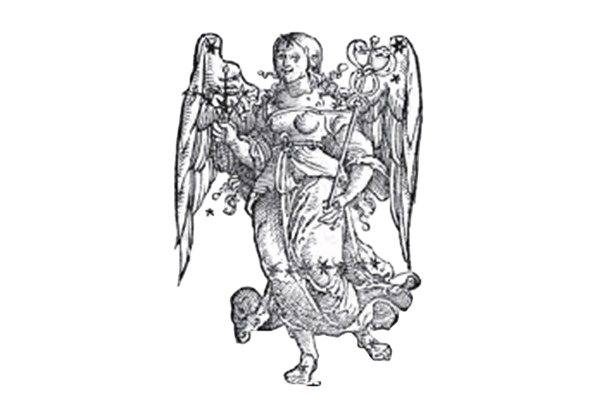
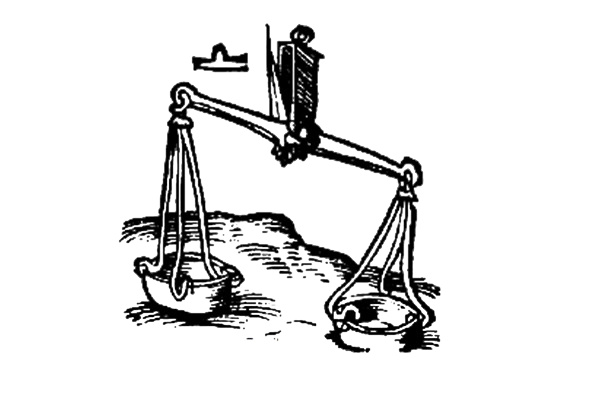
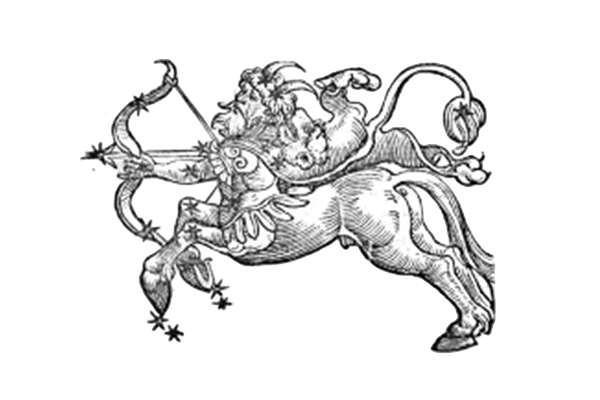
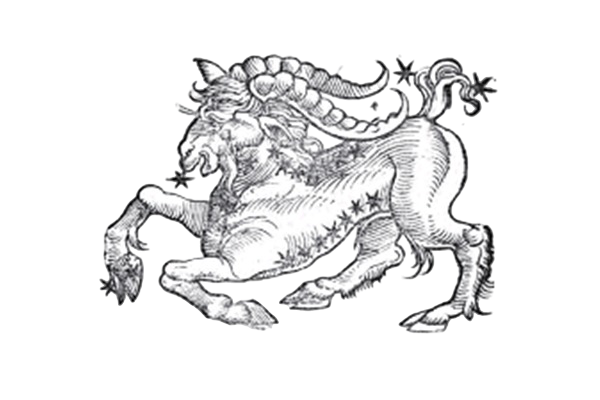
Pictured below are some images from our 252 pages guidebook that comes with the 90 card tarot deck.